
Pirates of Penzance by Gilbert and Sullivan
Presented by Hayes Theatre Co. at Foundry Theatre
Adapted and Directed by Richard Carroll
Review by Damien Barrett @_helloshoppers
There is always a slight sense of trepidation when walking into a new production of The Pirates of Penzance. Gilbert and Sullivan can be razor-sharp satire wrapped in glorious melodies and absurdity, but it can just as easily descend into something overly reverential, dusty and painfully earnest. Thankfully, the return season at Foundry Theatre understands exactly what makes this operetta endure more than 140 years after its premiere — it is supposed to be funny. Not politely amusing. Not “charming in a heritage theatre company” funny. Actually funny.
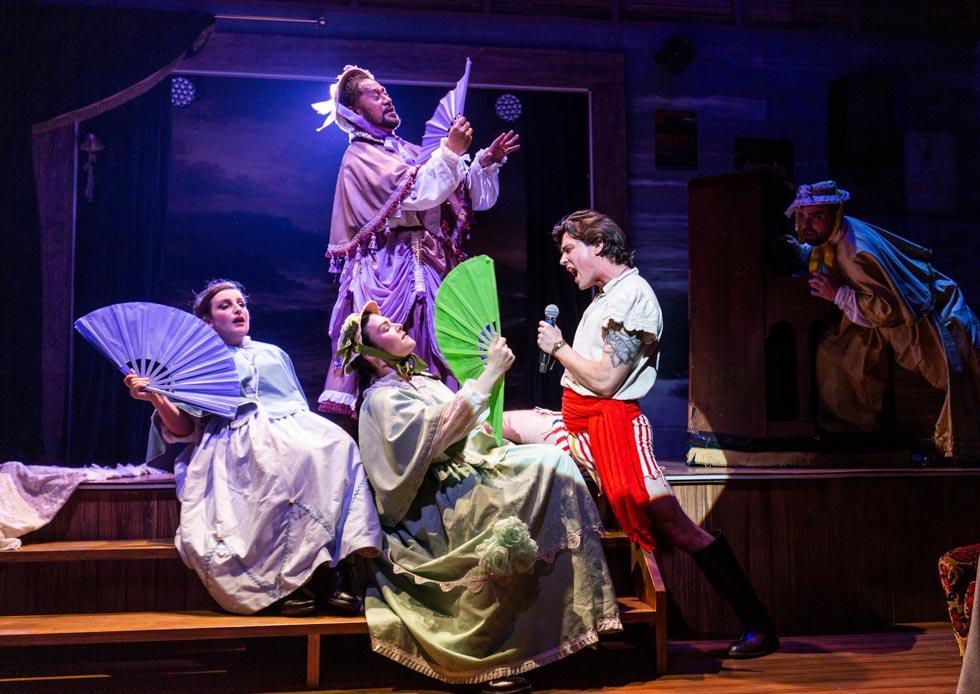
This production leans unapologetically into the chaos, silliness and theatricality of the piece, and the result is one of the most genuinely entertaining Gilbert and Sullivan productions I have seen in years. Rather than treating the material like a museum piece requiring delicate preservation, the creative team embraces the anarchy embedded within the text. The jokes land, the pacing rarely drags, and perhaps most importantly, the audience feels invited into the madness rather than simply observing it from a respectful distance.
That accessibility is ultimately what makes this production so successful. Gilbert and Sullivan were writing for audiences of their own time — audiences who would have appreciated topical humour, playful irreverence and the occasional wink toward contemporary culture. Too often modern productions forget this, presenting the material as though it were sacred rather than satirical. Here, however, the company restores that sense of immediacy. The operetta feels alive, current and wonderfully ridiculous.
A major contributor to that success is the production’s willingness to flirt with breaking the fourth wall. Normally, I find this more uncomfortable than effective. In many productions, it can feel smug or overly self-aware, pulling the audience out of the story instead of drawing them further in. Here, however, it is handled with remarkable confidence and restraint. The direct audience engagement feels organic to the tone of the piece rather than grafted on for cheap laughs. It creates an atmosphere that is warm, communal and delightfully unpredictable. You could sense the audience relaxing into the experience, becoming participants in the comedy rather than passive observers.
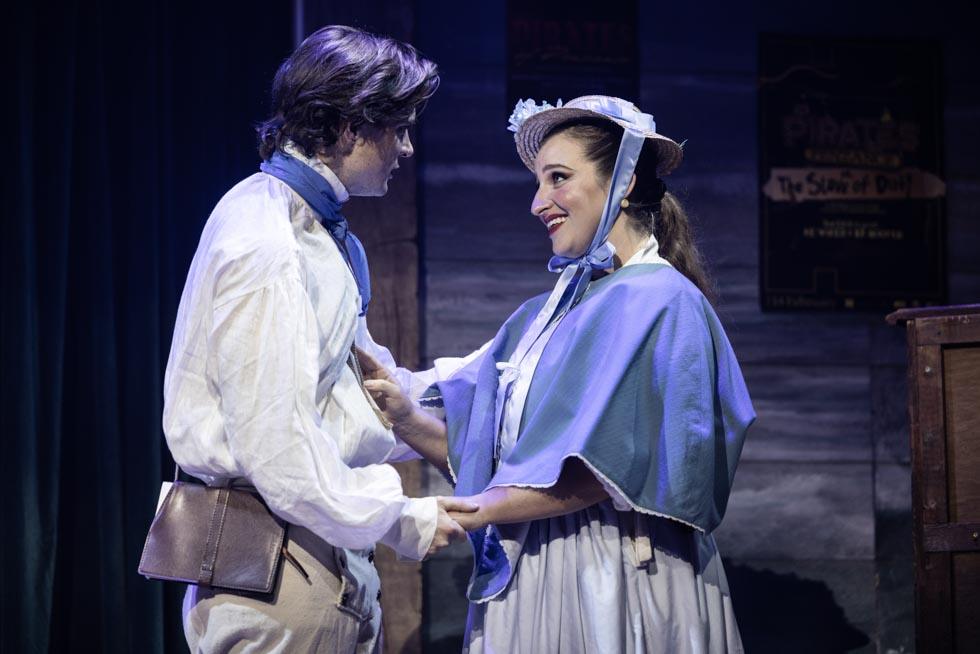
At the centre of the production is an extraordinary performance from Brittanie Shipway, who tackles both Ruth and Mabel with astonishing ease. It would be impressive enough simply to perform both roles vocally, but Shipway goes far beyond that. Her characterisations are so distinct that at times it genuinely feels as though two entirely different performers have taken the stage. Vocally, she shifts seamlessly between Ruth’s richer, more grounded tones and Mabel’s brighter, sparkling soprano work, never losing clarity or precision.
What makes the performance truly remarkable, however, is the acting detail. Ruth is worldly, dryly funny and slightly chaotic, while Mabel is romantic, buoyant and deliciously earnest. Shipway finds completely different physicality’s, rhythms and comic instincts for each woman. The transitions are effortless and astonishingly polished. It is the kind of performance that anchors an entire production because it demonstrates precisely the tonal balance this interpretation is aiming for — heightened comedy performed with absolute commitment rather than parody.
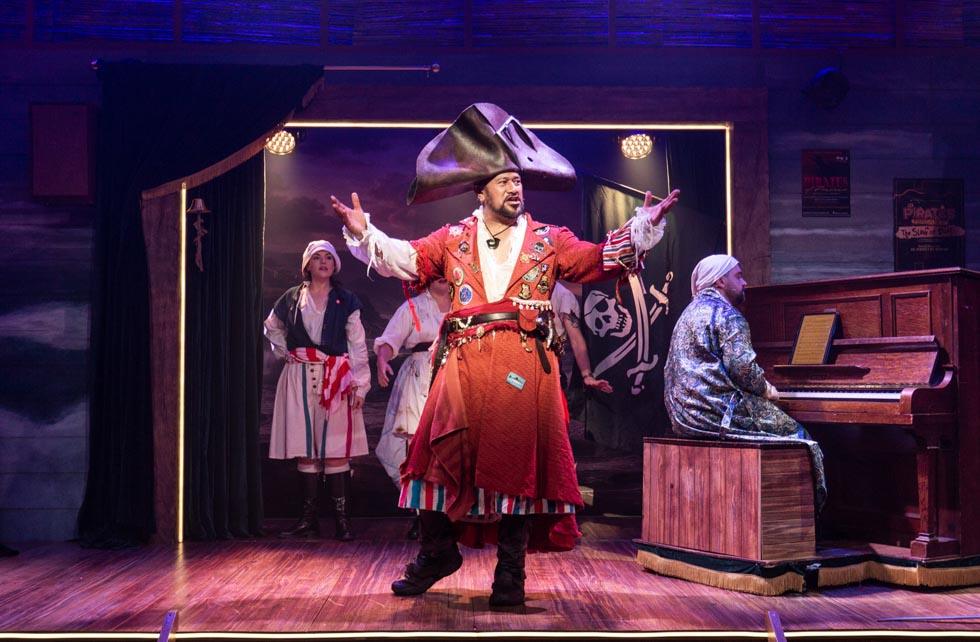
Jai Laga’aia brings enormous warmth and charisma to the Pirate King, creating a character who is both commanding and deeply likeable. Laga’aia wisely resists the temptation to play the role too broadly, instead grounding the comedy in personality and charm. His interactions with the ensemble are consistently entertaining, and his natural ease on stage gives the production much of its buoyant energy. There is a generosity to his performance that draws the audience in immediately, and his comic timing is impeccable throughout.
As Frederic, Maxwell Simon delivers a performance full of earnestness and charisma. Frederic can sometimes feel slightly overshadowed amidst the larger comic personalities surrounding him, but Simon ensures the role remains emotionally grounded and genuinely engaging. Particularly interesting was his choice to perform his first aria in a more contemporary pop vocal style. Purists may initially raise an eyebrow, but the choice proves surprisingly effective. Rather than feeling gimmicky, it adds an accessibility that fits perfectly within the production’s broader philosophy of making Gilbert and Sullivan feel contemporary and alive.
Then there is Jonathan Holmes as the Major-General, who almost steals the show outright. The role lives or dies on comic timing and lyrical dexterity, and Holmes delivers both in abundance. His rendition of “I Am the Very Model of a Modern Major-General” is one of the production’s undeniable highlights, aided by some cleverly rewritten lyrics that feel contemporary without becoming laboured or gimmicky. Importantly, the updated material still sounds stylistically consistent with the original patter song, preserving the rhythm and wit that make it so iconic.
Holmes understands that the Major-General is funniest when played with complete sincerity. Rather than leaning into caricature, he presents the character as gloriously self-important yet oddly lovable, which only makes the absurdity land harder. His interaction with the audience is particularly strong, demonstrating exactly why the fourth-wall breaks work so effectively in this production. There is generosity in the performance rather than self-indulgence.
A special mention must also go to Sarah Murr, who appears in multiple roles across the production but comes perilously close to stealing the entire show during Act Two as one of the constables. Murr possesses a wonderfully instinctive comic presence, understanding precisely when to lean into a moment and when to let the absurdity speak for itself. Her constable scenes are among the funniest in the production, driven by razor-sharp reactions and impeccable ensemble work. Even within a cast already operating at a very high comic level, she manages to stand out.
The ensemble as a whole deserves considerable praise for maintaining the production’s momentum and energy throughout. Gilbert and Sullivan can occasionally suffer from uneven pacing, especially in dialogue-heavy scenes, but there is very little sag here. The cast attacks the material with infectious enthusiasm and crisp comic precision. The choreography and staging embrace theatrical chaos without ever tipping into incoherence, allowing the comedy to breathe while still maintaining narrative clarity.
Musically, the production is equally assured. The score retains all the lushness and melodic beauty audiences expect, but there is also a refreshing sense of playfulness in the delivery. Rather than presenting the songs as formal concert pieces, the cast uses them as extensions of character and comedy. This might sound obvious, but it is surprisingly rare in productions of this repertoire.
What ultimately makes this return season so satisfying is its understanding that accessibility and quality are not mutually exclusive. Making Gilbert and Sullivan funny, contemporary and engaging does not diminish the work; if anything, it restores its original spirit. This production trusts audiences to appreciate both the sophistication of the music and the ridiculousness of the comedy simultaneously.
In a theatre landscape where classic works are often either treated with suffocating reverence or aggressively modernised beyond recognition, this The Pirates of Penzance finds the sweet spot. It honours the operetta by remembering that audiences are supposed to leave smiling.
And judging by the laughter echoing throughout Foundry Theatre, that mission has been accomplished spectacularly well.
Pirates of Penzance is produced by Hayes Theatre Co and plays The Foundry Theatre through 7 June 2026


In his past lives, Damien was a drag queen and musical theatre actor. He made his stage debut as a fat cow in a school production of Joseph in 1984. He holds a BA with a major in drama from the University of Newcastle. He is completely obsessed with musical theatre – especially Broadway divas.
Since relocating to Sydney at the beginning of 2024, he attends every musical he can get to and lives with his partner and grumpy 12-year-old poodle.
His claim to fame is that he once met Patti Lupone in New York and she was nice to him.